 Jotform
Statutory Declaration Template
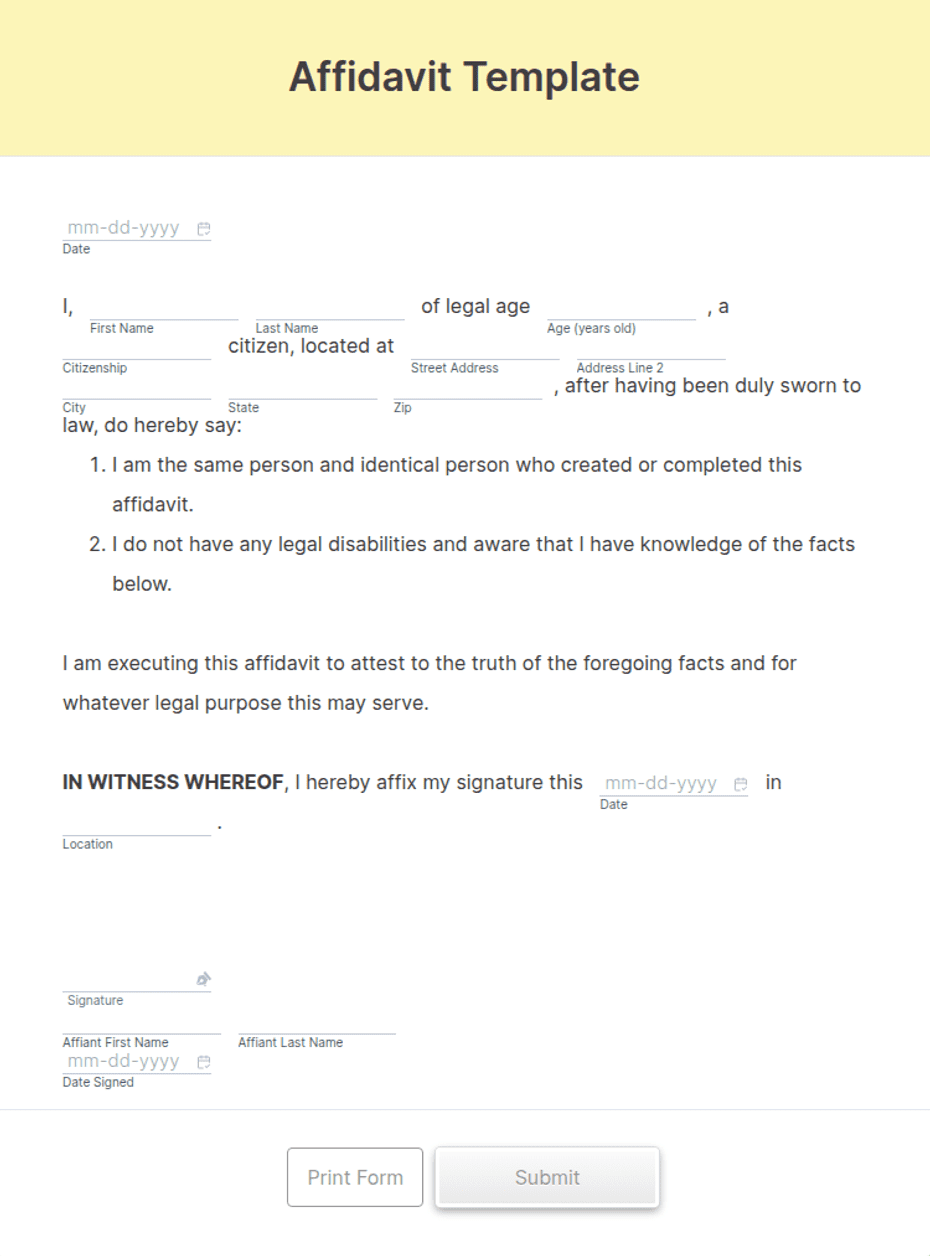
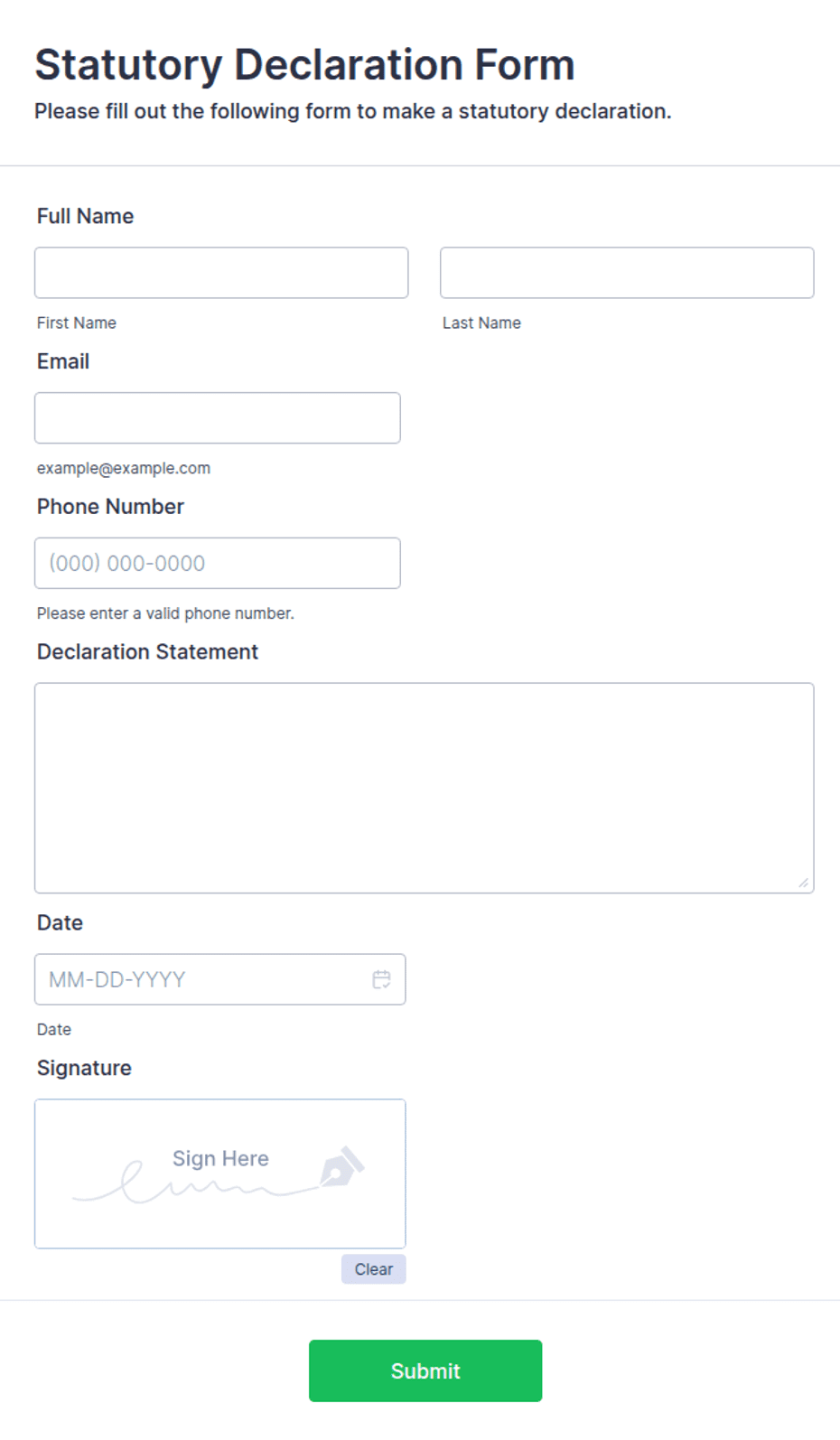
Statutory declaration with declarant details, a solemn declaration of facts, and a signature witnessed by an authorized commissioner or officer.
Available online on
Download as
- Free PDF and Word downloads for offline use
- Fillable fields you can customize for your business
- Share a link or print copies for in-person sign-ups
- Ready-made online forms on popular form builders
Last updated July 18, 2026. Reviewed by the Online Signature Forms team.
About this template
A statutory declaration is a formal written statement in which a person — the declarant — solemnly declares that something is true. It serves the same purpose as an affidavit but is used outside of court proceedings: confirming identity, marital status, a name change, a lost document, residency, or any fact an agency, employer, or institution needs verified. Instead of an oath sworn on penalty of perjury in litigation, the declarant makes a solemn declaration, and the document is witnessed by an authorized person such as a notary, commissioner for oaths, justice of the peace, or lawyer.
The strength of a statutory declaration comes from the solemn declaration and the authorized witness. By signing, the declarant affirms the facts are true to the best of their knowledge, and the witness confirms the declaration was made before them. That is why this layout keeps the declaration statement open for the facts, adds the standard "I solemnly and sincerely declare" wording, and closes with the declarant's dated signature and a block for the authorized witness or commissioner. This is a general-purpose layout, not legal advice; requirements for witnessing and notarization vary by jurisdiction, and the classes of authorized witnesses differ by country.
How this document is used
Someone changing their name declares their old and new names for a government record. A person confirms they are single for an overseas marriage application. An individual declares a document was lost so a replacement can be issued. In each case the declaration provides a witnessed, formal statement an institution can accept without the person appearing in person or going to court. The declarant keeps a copy and submits the original where required.
Complete and sign it correctly
Enter the declarant's full legal name, address, and occupation, then write the declaration of facts clearly and specifically. Keep the solemn declaration wording, and leave the signature and witness lines blank until you are in front of the authorized witness. Because the declaration must be witnessed, do not sign it in advance — sign in the presence of a notary, commissioner for oaths, or other authorized officer so they can complete the witness block. Use the Word file to adjust the wording for your jurisdiction, or the fillable PDF to complete a clean copy.
Common mistakes to avoid
Do not include opinions or second-hand information — declare only facts you know to be true. Do not leave blanks in the declaration; strike through any unused space. Do not sign before you reach the authorized witness, because the witness must see you sign. And do not assume any witness will do — confirm the person is authorized to witness a statutory declaration where you are submitting it.
Example scenario
A person needs to prove they have never been married for a marriage abroad. They prepare a statutory declaration stating their single status and full name, take valid ID and the unsigned declaration to a commissioner for oaths, and sign it in the commissioner's presence. The commissioner completes the witness block with their name, title, and the date and place, and the declarant submits the witnessed declaration to the foreign authority.
Choosing PDF or Word
This page offers a printable fillable PDF and an editable Word (DOCX) file. Use the Word file to adapt the declaration and the authorized-witness wording to your jurisdiction before printing, and the PDF when the facts are set and you only need to fill and sign. Both include the declarant signature line and an authorized witness or commissioner block so the declaration is ready to be made.
Typical fields
- Declarant full legal name
- Declarant address and occupation
- Declaration statement (facts declared)
- Solemn declaration ("I solemnly and sincerely declare...")
- Declarant signature and date
- Place where declaration is made
- Authorized witness / commissioner name and title
- Witness signature and date
- Capacity of witness (notary, commissioner, JP, lawyer)
Best for
- Name change or identity confirmation
- Single / marital status declarations
- Declaration of a lost document
- Residency or general fact verification
When to use PDF vs online
Use the PDF or Word download for in-person sign-ups, fax, or email attachments. Choose an online form when you need automatic notifications, payment integrations, or a shareable link for customers.