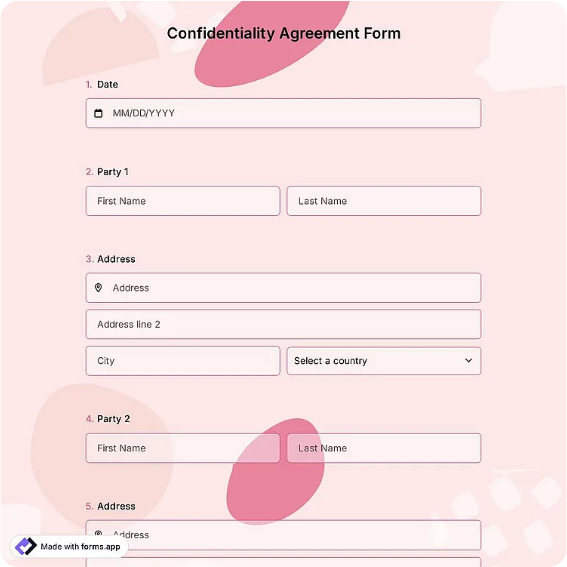
NDA & Confidentiality Forms
A non-disclosure agreement protects information you share before a deal, a hire, or a partnership — trade secrets, client lists, pricing, or product plans. These templates define what counts as confidential, how long the obligation lasts, and what the receiving party may and may not do, then close with a dated signature block for each side. They are general-purpose layouts, not legal advice; non-compete and confidentiality terms are heavily regulated and vary by state, so have an attorney review the wording before you rely on it.
Need PDF or Word only? See printable nda & confidentiality forms templates

Employee NDA Template
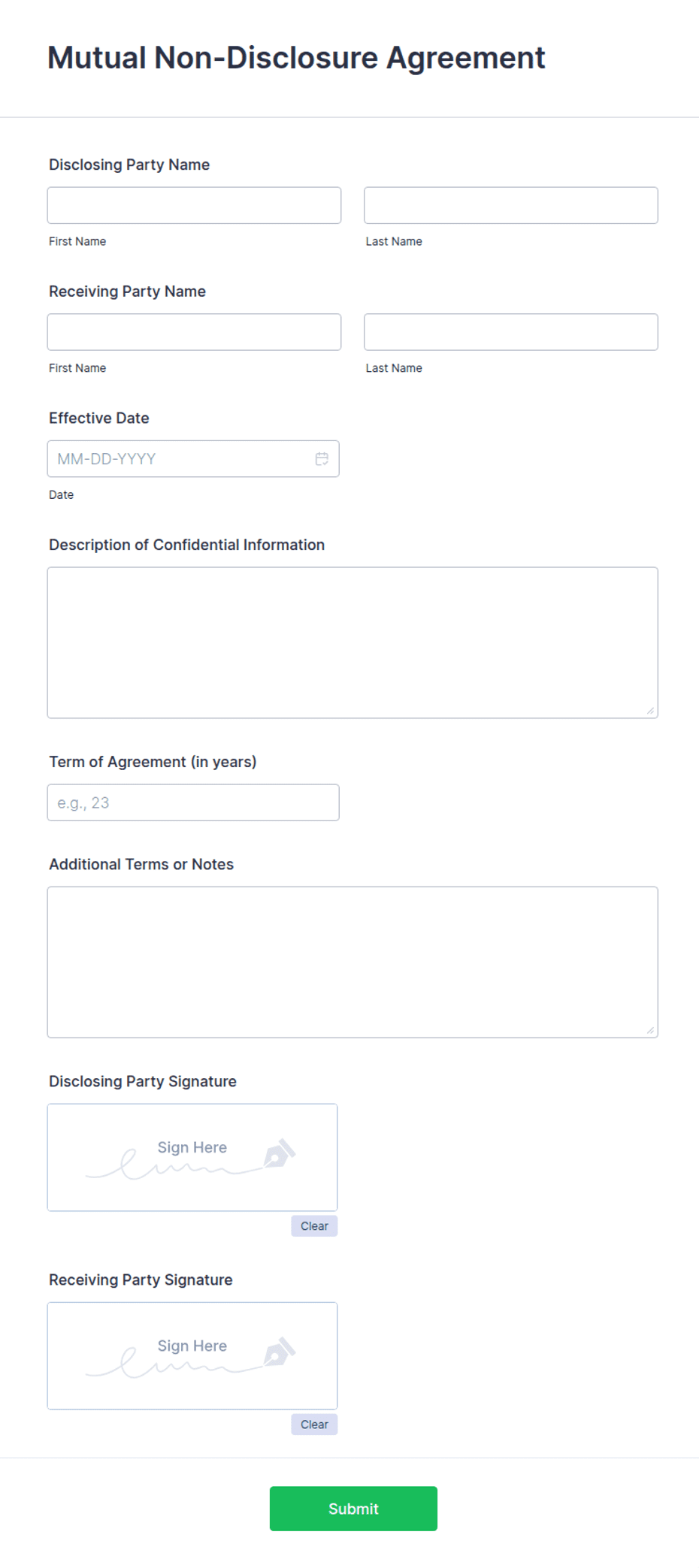
Mutual NDA Template
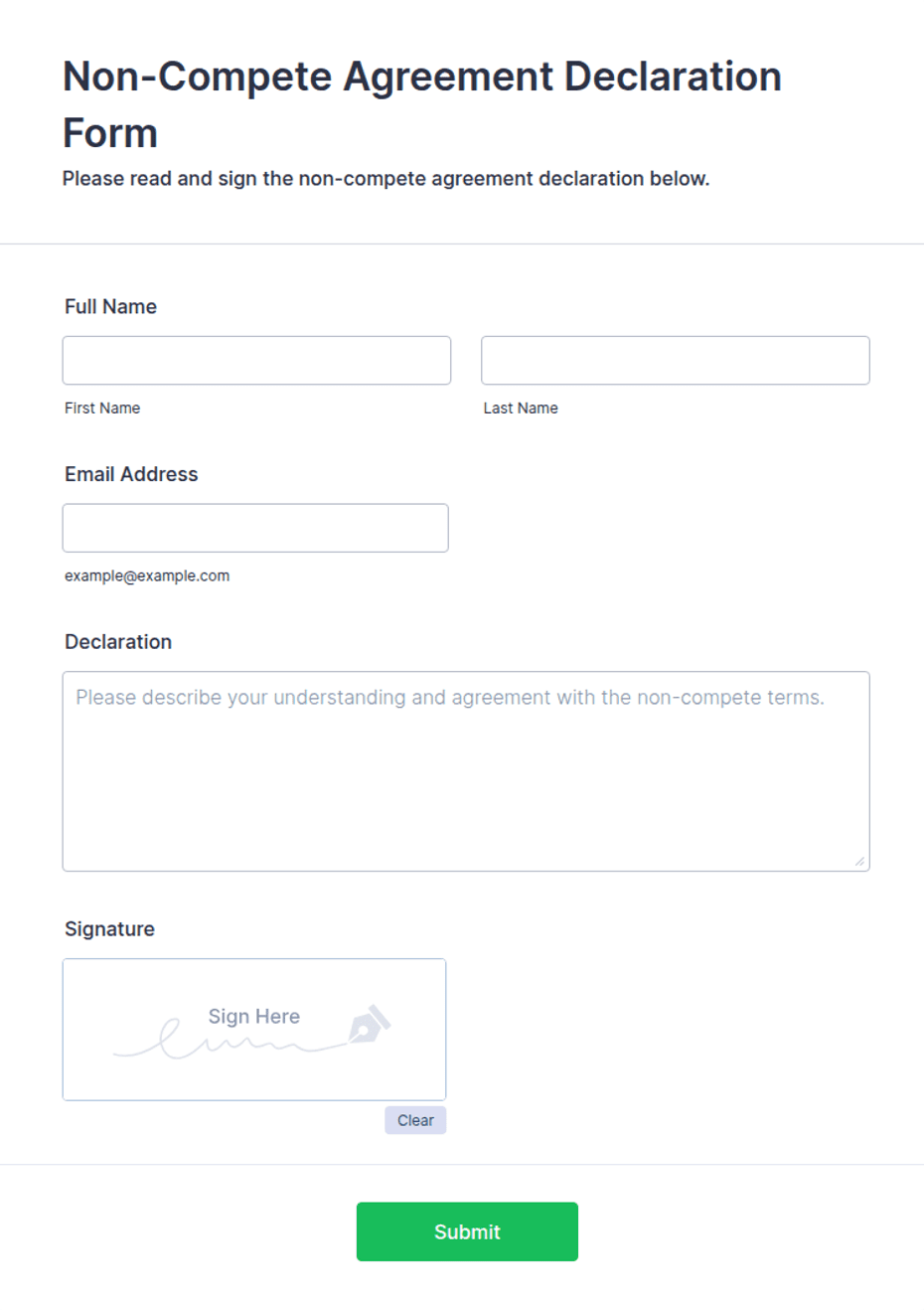
Non-Compete Agreement Template
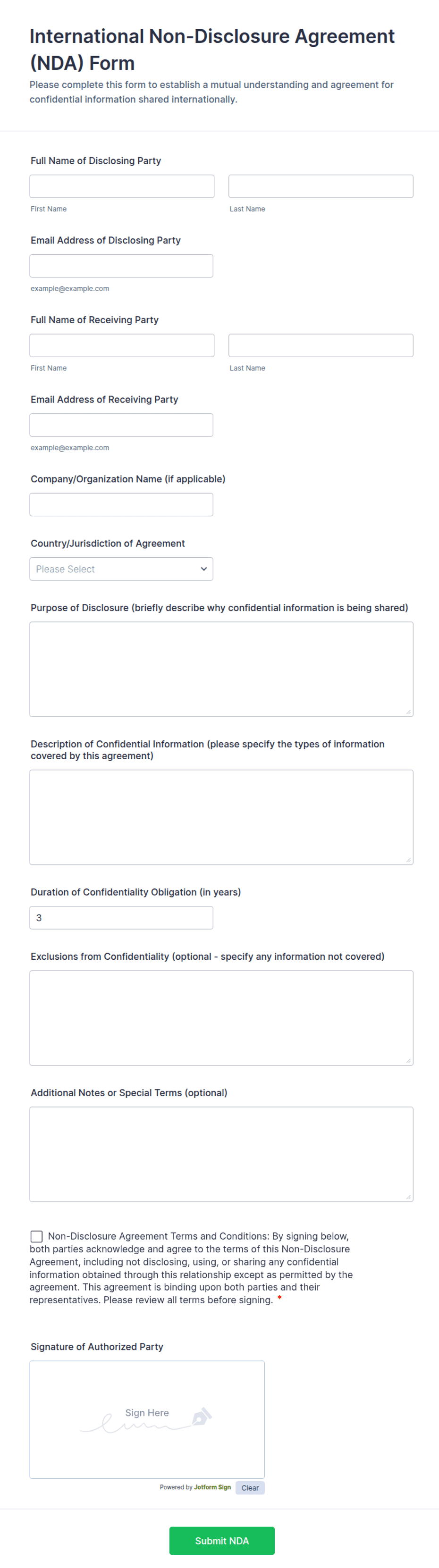
Non-Disclosure Agreement (NDA) Template

No templates match your filters. Try clearing filters or choosing another format.
Frequently asked questions
In a one-way (unilateral) NDA only one party shares confidential information and the other agrees to protect it. In a mutual NDA both parties exchange information and both agree to keep the other's confidential — common when two businesses explore a partnership.
NDAs are generally enforceable when reasonable, but non-compete agreements are heavily restricted or banned in some states and countries. Treat these as starting layouts and have a lawyer confirm what is enforceable where you operate.
A good NDA describes the categories of protected information (such as financials, customer data, source code, or business plans) and excludes things already public or independently developed. The templates include a definition section you can tailor.
Common terms range from two to five years after disclosure, though trade secrets can be protected indefinitely. The templates include a term field so you can set the period that fits your situation.