 forms.app
Confidentiality Agreement Template
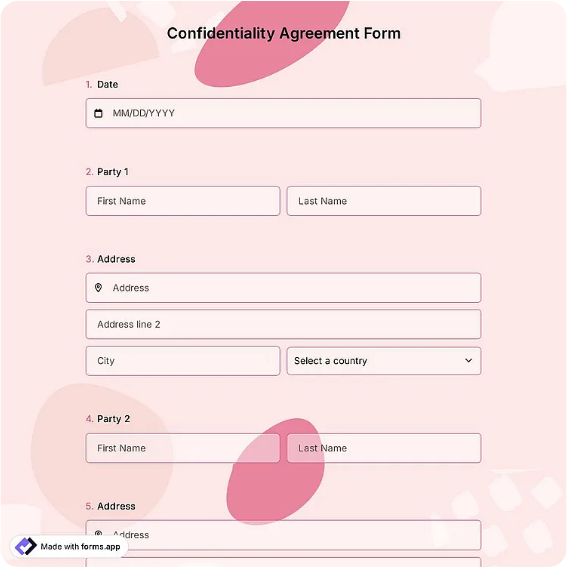
General confidentiality agreement with parties, a definition of confidential information, obligations, permitted disclosures, term, and dated signatures.
Available online on
Download as
- Free PDF and Word downloads for offline use
- Fillable fields you can customize for your business
- Share a link or print copies for in-person sign-ups
- Ready-made online forms on popular form builders
Last updated July 18, 2026. Reviewed by the Online Signature Forms team.
About this template
A Confidentiality Agreement is a signed commitment to keep specific information private and to use it only as agreed. It is the broad, flexible cousin of the NDA: businesses use it with contractors, advisors, board members, volunteers, or anyone who will handle sensitive material but does not fit neatly into a standard employment or vendor arrangement. Typical fields include both party names and addresses, a definition of confidential information, the obligations of the party receiving it, the permitted disclosures, how long the duty lasts, and a dated signature block for each side.
The agreement only protects anything once it is signed: an unsigned draft is just a wish, while a signed and dated copy creates a record both parties can rely on. That is why this layout keeps the definition and obligations readable and places the two-party signature block at the very end, with signature, printed name, and date lines. To be clear, this is a general-purpose layout with the sections most confidentiality agreements need — it is not legal advice. Confidentiality terms vary by state, so have an attorney review the wording before you rely on it in a sensitive situation.
How teams use this agreement
A nonprofit has a volunteer sign before giving them access to donor records. A company asks an outside advisor to sign before sharing its financial model. A medical practice has a temporary contractor sign before they encounter patient information. The common thread: someone outside the core team will see private information, and the organization wants a clear, signed understanding of how that information may — and may not — be used.
Define what is confidential before signing
Start with a precise definition of confidential information — records, financials, designs, personal data, and anything marked confidential — rather than a vague catch-all. Then set the obligations (protect it, do not disclose it, use it only for the stated purpose) and list the permitted disclosures, such as disclosures required by law or made to advisors under the same duty. Open the Word (DOCX) download to edit these clauses and set your term. The fillable PDF is ready to complete and sign as-is.
Common mistakes to avoid
Do not leave the definition blank or impossibly broad — either extreme is hard to enforce. Do not omit the permitted-disclosures section, or the recipient may be unsure what a court order requires of them. Do not forget the term, which sets how long the duty lasts. And remember that only the parties who sign and date the document are bound by it.
Example scenario
A design studio brings on a freelance photographer for a product launch. Before sharing the unreleased products and campaign plans, the studio has the photographer sign this confidentiality agreement, defining the products and plans as confidential, limiting use to the shoot, and setting a two-year term. Both sign and date two copies, and each keeps one before any files are shared.
Choosing PDF or Word
This page offers a printable fillable PDF and an editable Word (DOCX) file. Use the Word file when you need to adjust the definition, obligations, permitted disclosures, or term before printing, and the PDF when the terms are settled and you just need to fill and sign. Both include a dated, two-party signature block so the agreement is ready to execute the moment both sides sign.
Typical fields
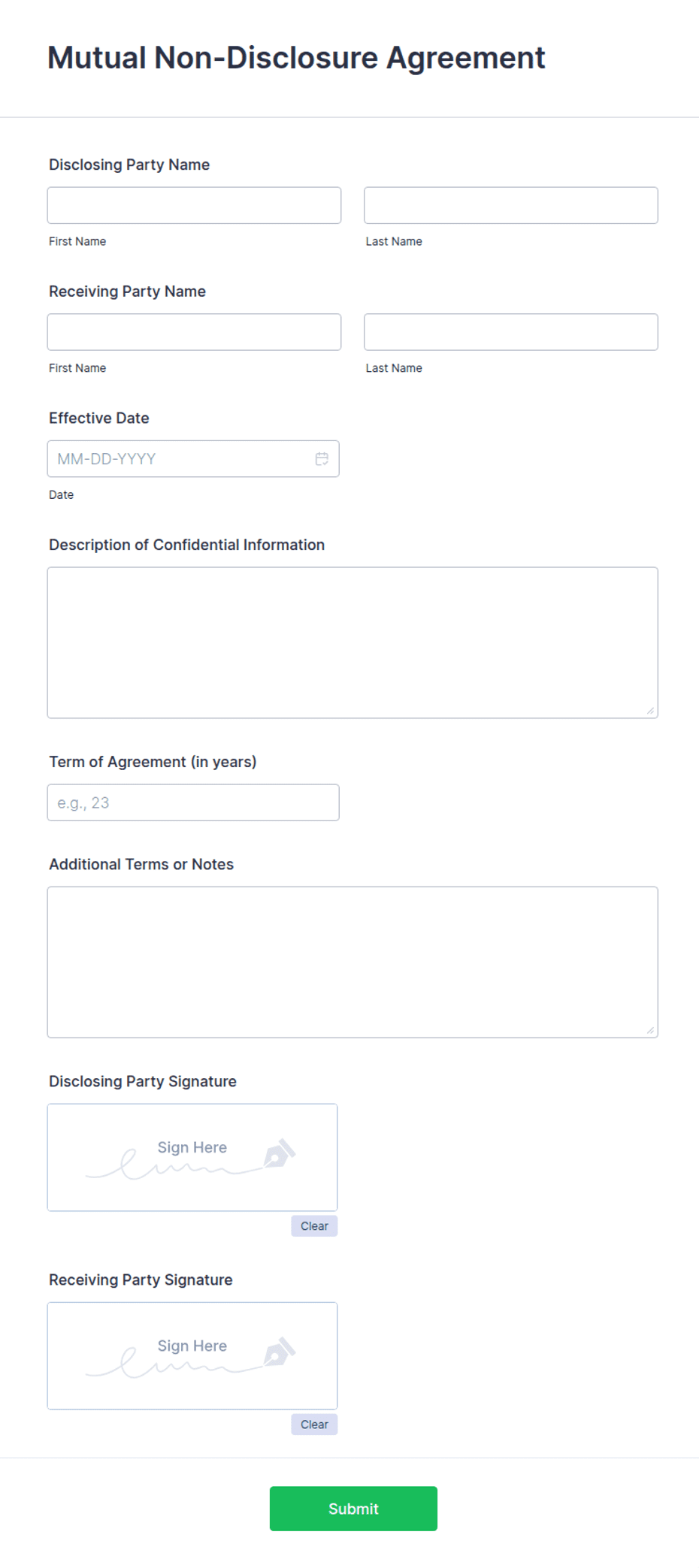
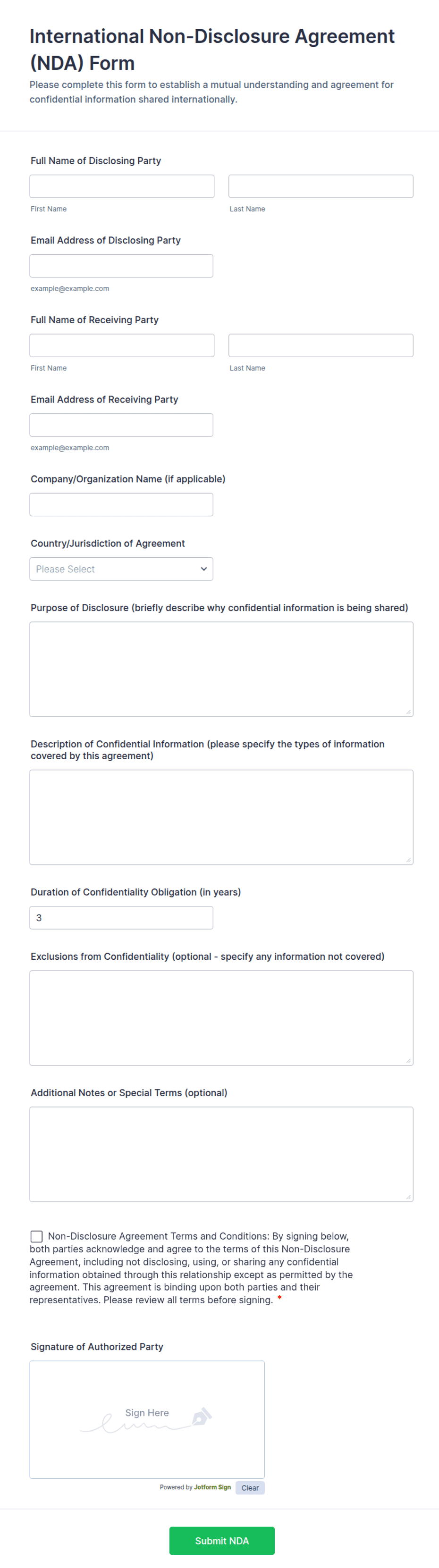
- Disclosing party name and address
- Receiving party name and address
- Definition of confidential information
- Obligations of the receiving party
- Permitted disclosures
- Purpose of the disclosure
- Term / duration of obligation
- Disclosing party signature, printed name, and date
- Receiving party signature, printed name, and date
Best for
- Advisors, board members, and consultants
- Volunteers handling donor or member records
- Contractors with access to sensitive data
- Any situation needing a signed privacy commitment
When to use PDF vs online
Use the PDF or Word download for in-person sign-ups, fax, or email attachments. Choose an online form when you need automatic notifications, payment integrations, or a shareable link for customers.