 forms.app
Patient Intake Form Template
New-patient intake with demographics, insurance, medical history, medications and allergies, a consent-to-treat acknowledgment, and a dated patient or guardian signature.
Available online on
Download as
- Free PDF and Word downloads for offline use
- Fillable fields you can customize for your business
- Share a link or print copies for in-person sign-ups
- Ready-made online forms on popular form builders
Last updated July 18, 2026. Reviewed by the Online Signature Forms team.
About this template
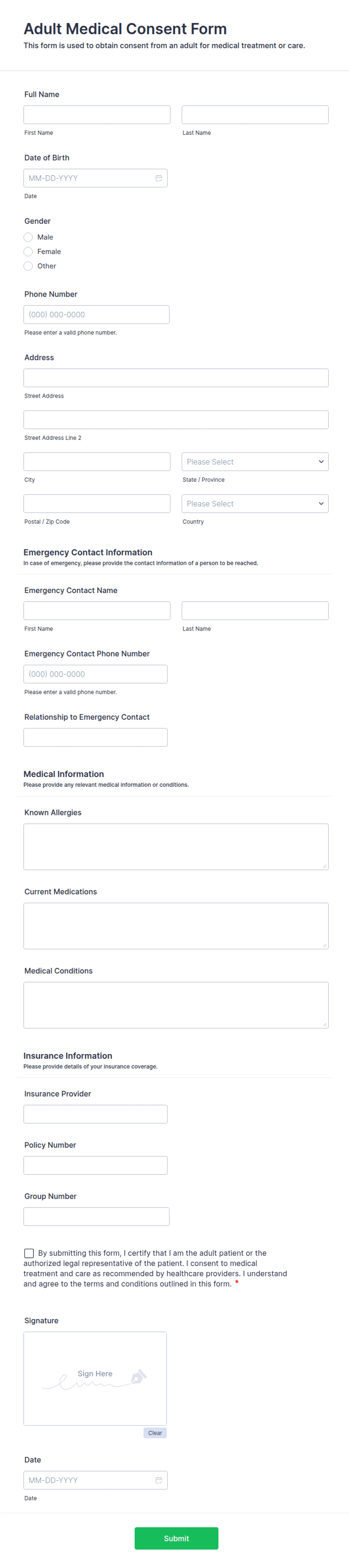
A Patient Intake Form is the document a new patient completes before their first visit so the practice has their demographics, insurance, medical history, and consent to treat on file. Clinics, dental and therapy offices, chiropractors, urgent-care centers, and specialty practices use one so the care team starts every appointment with an accurate picture of the patient and a signed record that treatment was authorized. Typical fields include the patient's name, date of birth, and contact details, the insurance and responsible-party information, a medical history with current medications and allergies, a consent-to-treat statement, and a dated signature — plus a guardian section when the patient is a minor.
The signature at the bottom is what turns the paperwork into a record the practice can rely on: it confirms the information is accurate and that the patient consents to be treated. This layout keeps the history and medication sections easy to read, places a consent-to-treat acknowledgment above the signature block, and adds a separate guardian section so a parent can sign for a minor. To be clear, this is a general-purpose layout with the sections most intake forms include — not legal or medical advice. Have your compliance lead or attorney review the consent wording so it fits your practice and jurisdiction.
How teams use this form
A family clinic emails the intake form ahead of the first appointment so the front desk can verify insurance before the patient arrives. A dental office hands it to every new patient on a clipboard and scans the signed copy into the chart. A physical-therapy practice uses the medical-history and medication sections to flag anything that affects the treatment plan. The common thread: the visit runs smoothly because the history, insurance, and consent are captured and signed up front.
Customize the form before signing
Open the Word (DOCX) download to add the history questions your specialty cares about, list the insurers you accept, and rewrite the consent-to-treat statement for your practice. Add your clinic name and logo, expand the allergies and medications rows, and adjust the guardian section if you only ever treat adults. The fillable PDF is ready to complete on paper or on a device; keep the consent checkbox and signature lines intact so the finished form is complete.
Common mistakes to avoid
Do not let patients skip the allergies and current-medications fields — those drive safe care. Do not leave the insurance or responsible-party section blank, or billing stalls later. And for any patient under 18, do not let them sign for themselves: a parent or legal guardian completes the guardian section and signs. Give the patient a copy so they leave knowing what they consented to.
Example scenario
A new patient books a first visit at a chiropractic clinic. Before the appointment they fill in their demographics and insurance, list a blood-pressure medication and a penicillin allergy in the history section, read the consent-to-treat statement, tick the acknowledgment box, and sign with the date. Because the patient is 16, a parent completes the guardian section and signs as well. The front desk verifies the insurance from the form and the provider reviews the history before the exam begins.
Choosing PDF or Word
This page offers a printable fillable PDF and an editable Word (DOCX) file. Use the Word file when you need to add specialty history questions, change the insurer list, or rewrite the consent statement before printing, and the PDF when the form is set and you just need patients to fill and sign. Both include the consent-to-treat acknowledgment and dated patient and guardian signature lines so the intake form is ready to use.
Typical fields
- Patient name and date of birth
- Address, phone, and email
- Insurance provider and policy / group number
- Responsible party (if not the patient)
- Primary care physician
- Reason for visit
- Medical history and current conditions
- Current medications
- Allergies
- Consent-to-treat statement and acknowledgment checkbox
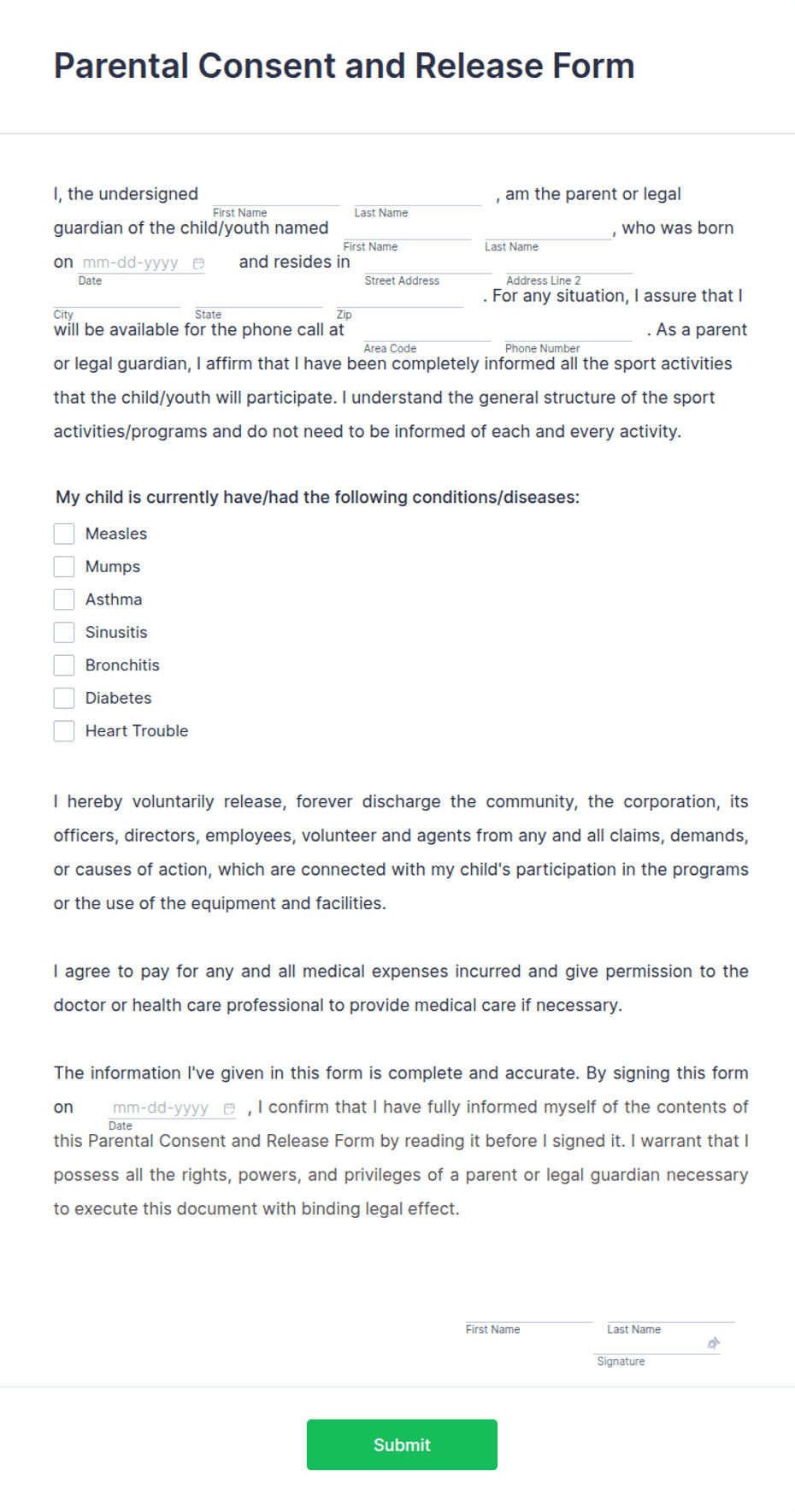
- Guardian name and relationship (if patient is a minor)
- Patient or guardian signature and date
Best for
- Family clinics and primary care
- Dental and therapy practices
- Chiropractic and specialty offices
- Urgent care and walk-in visits
When to use PDF vs online
Use the PDF or Word download for in-person sign-ups, fax, or email attachments. Choose an online form when you need automatic notifications, payment integrations, or a shareable link for customers.